Nigeria
Trump’s Nigeria strikes: A misleading narrative
Shanta Premawardhana
.png)
[This article was published in Baptist News Global on December 29, 2025.]
On Christmas Day, President Donald Trump announced the United States had launched airstrikes in Sokoto State in Northwestern Nigeria “to protect the country’s Christian population from the terrorist group (ISIS).”
Although Nigeria’s Foreign Ministry acknowledged collaboration with the U.S., many Nigerian and African leaders view this as an assault on Nigerian sovereignty, worrying that continued unilateral intervention threatens all Africa. U.S. Secretary of Defense Pete Hegseth’s social media posting confirmed this is the first of more attacks to come.
Since 2017, my organization, OMNIA Institute for Contextual Leadership, has been active in Northeast Nigeria, countering the extremist violence of Boko Haram. We initiated Interfaith Peacemaker Teams that bring together religious and civic leaders to collaborate across disparate factions through strategies ensuring consistent wins. Muslims, Christians and African traditional religious leaders working with local civic leaders build social cohesion, reducing opportunities for religious persecution and enhancing religious liberty.
The criminal banditry and kidnappings in Nigeria are intolerable. Significant numbers of Christians have been attacked, killed and injured, particularly in the Middle Belt. The massacre in Zike, Plateau State, last April, and another in Yelwata, Nasarawa State, in June are terrible atrocities.
However, by framing Nigeria’s conflict as an existential threat to Christians alone, Trump is stoking Islamophobia, mobilizing his evangelical base and doing a serious disservice to people facing real religious persecution.
An AP news article quotes experts and data from the U.S.-based Armed Conflict Location and Event Data Project and Council on Foreign Relations, showing that “Christians are often targets in a small percentage of overall attacks that appear to be motivated by religion, in some northern states. But the numbers and analysts also indicate that across the north, most victims of overall violence are Muslims.”
Last month, about 25 students were kidnapped from a Muslim school in Kebbi State. Last Wednesday night, a suspected suicide bomber struck a mosque in Maiduguri, the epicenter of Boko Haram, killing five. Boko Haram and ISWAP target not only Christians but Muslims who reject their extremism — all are “infidels” who could be killed.
Terrorism in Nigeria is multifaceted, as groups operate with ideological and economic motivations that are too complex to be distilled down to simply the persecution of Christians by Islamic extremist groups.
Both governments are blinded by the perception that military action is the only answer to terrorism. While bombs make a spectacular bang, they often fail to deliver desired results and can have opposite effects. These terrorist groups are embedded within local communities. It’s impossible to bomb population centers without mass casualties.
Governments also fail to recognize that Boko Haram and ISWAP are ideologically motivated. Boko Haram emerged believing Western education and systems are evil, requiring the Nigerian government and its institutions to be dismantled and replaced with an Islamic caliphate. The critical insight governments miss: Ideas cannot be bombed out of existence.
Eight years ago, Gombe State was extremely dangerous. Adjacent to Borno State, Gombe saw regular village attacks. Our theory: Extremist violence thrives because age-old distrust between Muslims and Christians creates gaps Boko Haram exploits for recruitment. Closing that gap through trusting, collaborative relationships would deny Boko Haram its foothold. Our theory proved right.
Today, 140 Interfaith Peacemaker Teams operate throughout Gombe State, each with about 20 religious and civic leaders. This has produced a significant drop in religious animosity and violence. In 2023, Gombe became the second safest state in Nigeria; in 2024, the state with the fewest kidnappings.
The governor recognized this achievement resulted from large numbers of religious leaders collaborating effectively across the state, reducing space for terrorists to function.
The migration of herders southward seeking pastureland due to expanding desert is another problem. These young Fulani men are Muslims.
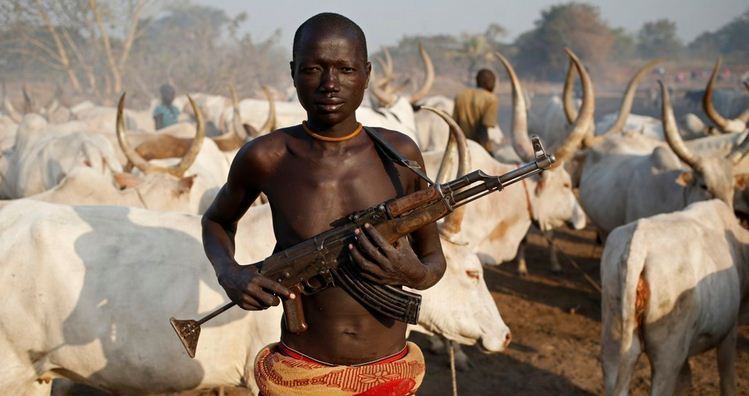
Moving south, they encounter crop farmers, mostly Christians. Critically, the herds belong not to these young men but to wealthy industrialists in big cities who supply weapons and incite violence. Many crop farmers are killed.
Without context, one might assume Muslims are killing Christians — but they’re being killed as crop farmers protect their land from invading herders, who happen to be Christian and Muslim respectively.
In Lapan village, marginalized Fulani families considered leaving. The Interfaith Peacemaker Team built relationships and integrated them into the community. Two years ago, two Fulani leaders specifically expressed gratitude for our team’s work.
Religious persecution, including Christian persecution, is a real problem requiring action. However, let’s be clear: Trump exploits his followers’ religious sensibilities for political advantage. He doesn’t care about religious or Christian persecution. Two examples demonstrate this:
Gaza: Primarily Muslim, Gaza has experienced what many call genocide by Israel. By Trump’s Nigeria logic, this constitutes Muslim persecution. Gaza also has Christians — Israeli attacks killed so many that only 600 remain. Churches were destroyed. About 400 live in the Holy Family Catholic church compound, the only church standing. On Christmas Eve they gathered for worship after two years. By the same logic, Gaza has Christian persecution too. Trump isn’t worried; he supports Israel’s actions.
Latin American immigrants: The Trump administration is rounding up people who look Latin American in many U.S. cities, holding them in crowded detention centers with little food or medicine, without legal access and deporting them without due process. Ninety-two percent are Christians — mostly Catholics, with significant Pentecostal minorities. When Catholic priests and nuns sought to bring Holy Communion, including on Christmas Eve, they were refused. By the same logic, this deprivation constitutes Christian persecution.
Trump’s stated reason for bombing Nigeria is disingenuous. His real motivations remain unclear. He may be targeting Nigeria’s oil — Africa’s second-largest reserve. He’s already at war with Venezuela, another oil-rich nation. How often have we heard “rare-earth minerals” during Trump’s second term? Recently, his rhetoric about annexing resource-rich Greenland intensified with a new envoy appointment.
Or he may be establishing a West African base responding to rising populist revolutions in Burkina Faso, Mali and Niger. Either way, this development bodes poorly for both countries.
I call on people of faith in both countries to resist this militarized violence together, which will only beget more violence, and live in to our call to peacemaking. We’ve demonstrated an effective alternative — Interfaith Peacemaker Teams.
This was published on December 29, 2025. https://baptistnews.com/article/trumps-nigeria-strikes-a-misleading-narrative/
Learn MoreOMNIA Institute for Contextual Leadership
5001 S. Ellis Avenue, Chicago, IL 60615, USA
