
Herders and Farmers Join Hands in Lapan
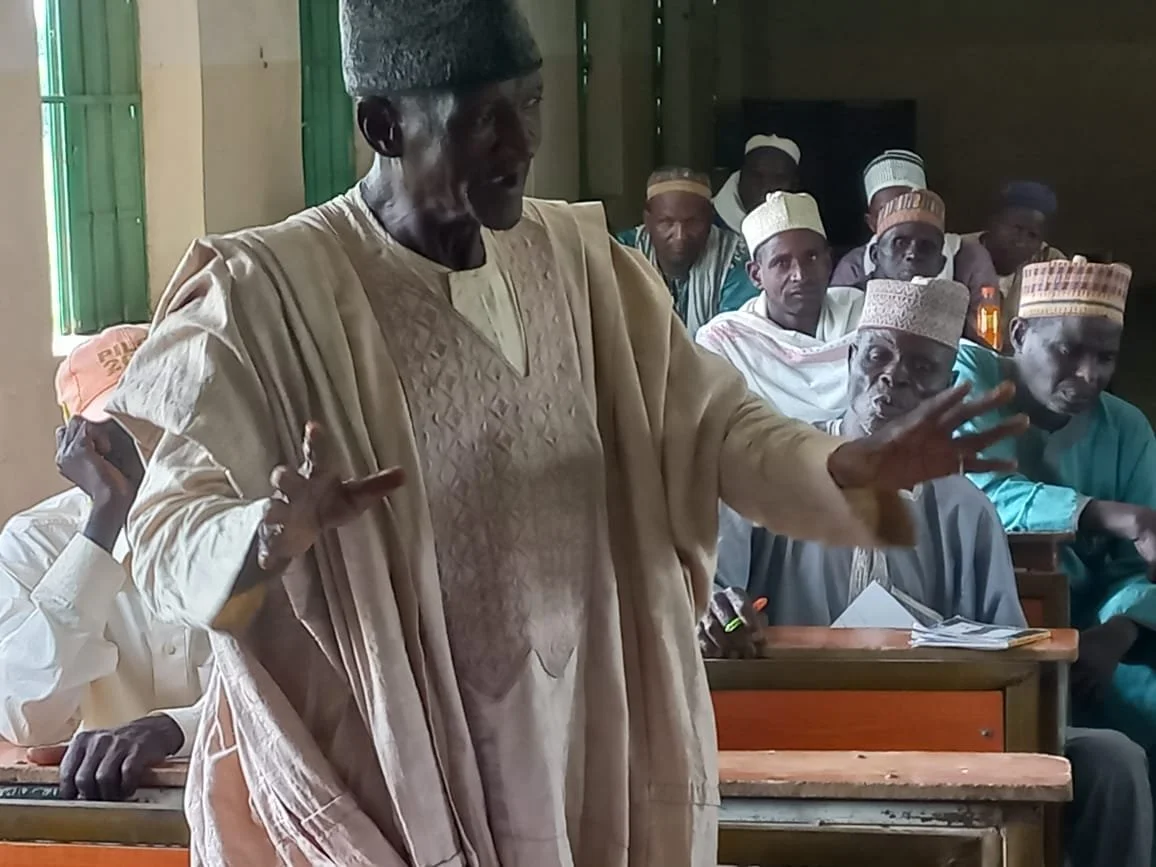
For several years now Fulani cattle herders trekking southwards as a result of desertification (expanding Sahara desert) seeking greener pastures. On their way, the herds destroy crop farms, which inevitably lead to fights with crop farmers, who are usually from other tribes. The Fulani are mostly Muslims and crop farmers are mostly Christian. Consequently, this often gets labelled as a Muslim-Christian conflict, although it is primarily about food and water.
Fulani herders, mostly young boys are hired by herd-owners who are wealthy business people who live in the cities. They give these herders automatic weapons, which they use to threaten and kill crop farmers. The violence has been particularly brutal in the Middle-belt of Nigeria. Consequently, the relationship between Fulani people and other tribes are severely strained.
In the village of Lapan, Gombe State, a minority of Fulani families were ostracized by the others. The Interfaith Peacemaker Team stepped in. Agreeing that both sides have legitimate claims -- the cattle must eat, and crops must be allowed to grow – the team negotiated a compromise where pasture land was made available for the herders that was away from crop farms. Some Fulani leaders specifically came to an OMNIA meeting to say that they were considering leaving the community, but because of the compromise offered by the IP Team, they decided to continue to stay in the village. In the picture is Rev. Amos Karatu, one of the IP Team leaders. In the audience are many Fulani leaders.